TRAVELERS’ STATION: SULTONTEPA UZBEKLAR TEKKESI


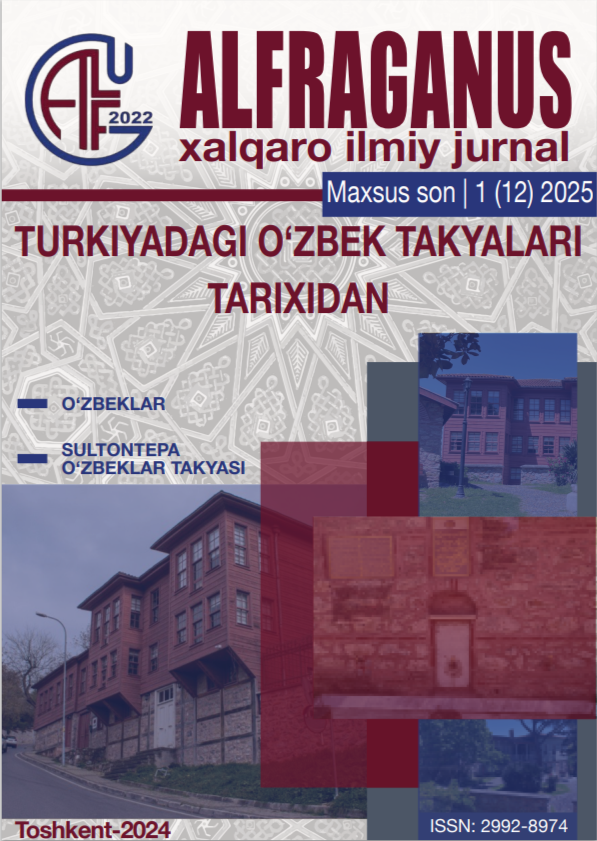
Abstract
The article comments on studies dedicated to the interconnection between Susm (tasawwuf), theHajj, and thetakya(tekke).It provides information on the signicance and types of travel for Sus, the stopping places of pilgrims from CentralAsia in Istanbul, and thecities they visited.Additionally, it emphasizes thefact that thetakyaserved as acenterfor culturaland informational exchange for visitors. Based on the information provided in the sources, it hasbeen established that by the 19th century, Sus had become an active stratum of society.The takyas that served these Sus began to play an important role not only in stimulating population movement, which was signicant for the transformationand development of cities, but also emerged as carriers of science,education, and culture. The article analyzes the Guest Notebook, Notebook of Ofcial Guests and Residents' Notebook of SultantepaUzbeklarTekkesidating back to the late19th and early 20th centuries and uses them to highlight the internal life of the takya, as well as itsmultifacetedactivitiesasasocialinstitution.Theserecords,consistingof263pages, contain information on atotalof1,329 people, which givesan ideaofwherevisitors to the takya came from, the purpose and duration of their visits, their occupations, and even their appearance. Based on this data, one can learn that the visitors to the UzbeklartakkesiaremainlyfromCentralAsiaanditsenvirons,aswellasfromChina andAfghanistan, with a few visitors from Tunisia, and from cities close to the borders ofthe Ottoman Empire. Thearticleargues,basedonnotebookentries,thatoneofthemainreasonsforthe visits was to visit holy places and that visiting Istanbul was a tradition for those who wenton thehajj. However,based ontheprofessions ofthevisitors,it canbeconcluded that thepurposeofthe visit varied: commercial, religious, and even military. The most frequently mentioned professions of the visitors were artisans and people of the arts. Additionally, the presence of those identified as "people without crafts," meaning without a profession, demonstrates that the takya also served as a shelterfortheneedy. Furthermore,thesignificantnumberofstudents amongtheguests underscores that the takya played a role in encouraging young people to pursue knowledgeand education. It is important to note that the analysis of the notebook entries not only provides insights into the visitors but also, through the information about them, denes a range ofissuesforstudyingthisandothertakyas.Additionally,itclariespotentialdirections forfutureresearch onthis topic.Maxsus son | 1 (12) Alfraganus xalqaroilmiyjurnali 79KEY WORDS: "Uzbeklar Tekkesi" (The Uzbeks Lodge), “Guest Notebook”, “NotebookofOfficialGuests”,“Residents'NotebookofSultantepaUzbeklarTekkesi”, Sufis.Keywords
Oʻzbeklar takyasi, Mehmonlar daftari, Rasmiy mehmonlar
References
Downloads
Download data is not yet available.